
 Industrial Automation


How to Choose the Right Servo Pump Unit for Your Hydraulic System Integration ?
Project
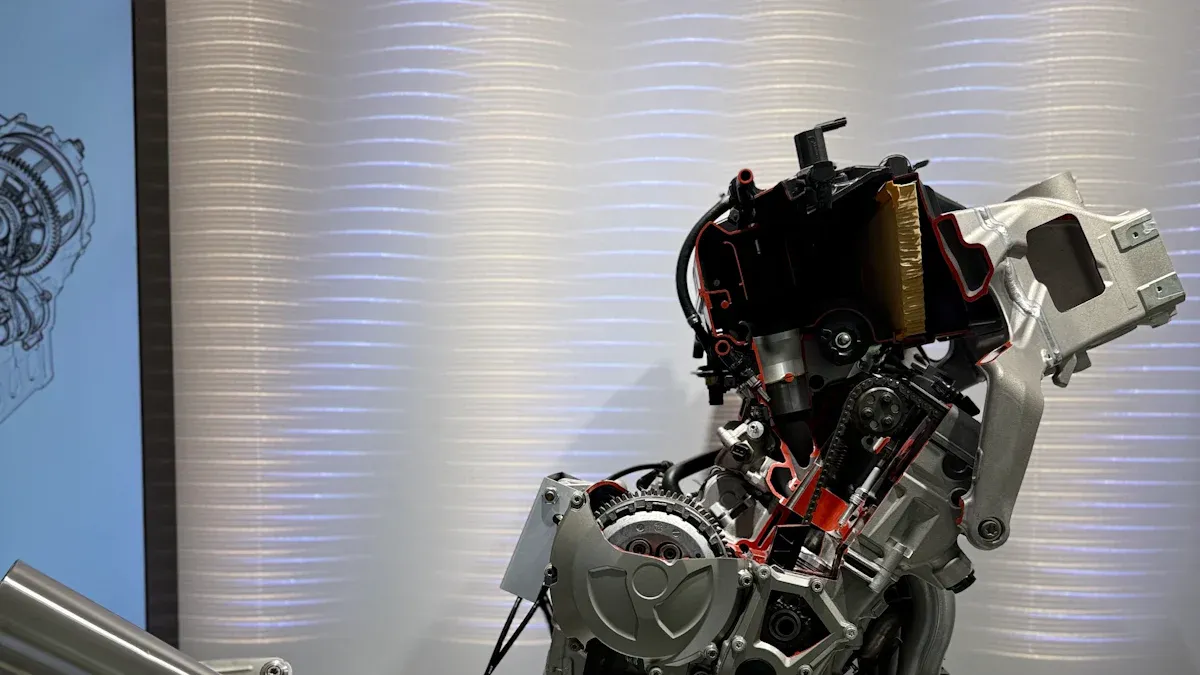
Servo pump units critically transform modern hydraulic systems with precise control, energy efficiency, and reduced noise. These benefits drive a U.S. market valued at USD 4.25 Billion in 2024, with robust growth projected. This guide provides a systematic approach for selecting the optimal unit from a Servo Hydraulic Pump unit manufacturer or aservo hydraulic retrofit solution supplier.
Key Takeaways
- Servo Pump units make hydraulic systems better. They save energy, make less noise, and work more precisely than old systems.
- Choosing the right Servo Pump unit means understanding your system's needs. You must look at how much power it needs, how long it runs, and where it will be used.
- When picking a supplier, check their quality, how well they support you after buying, and if their units are easy to fix. This helps your system work well for a long time.
Understanding Your System's Needs and the Benefits of Servo Technology

Defining Hydraulic System Performance Requirements
Selecting the correct servo pump unit begins with a clear understanding of the hydraulic system's performance demands. Engineers must define critical metrics. These include operating pressure capability, which determines efficiency under hydraulic load. The overall condition of existing components, including wear, leakage, and operational history, also impacts performance and longevity. Energy efficiency remains crucial for managing operational costs, with notable differences between motor-controlled and valve-controlled cylinders. Advanced sensor integration provides real-time data on pressure fluctuations and thermal conditions, improving maintenance and efficiency.
Analyzing Load Characteristics and Duty Cycles
A thorough analysis of load characteristics and duty cycles is essential. This involves identifying the required force or torque, operating speed, and motion profile. Engineers must also consider the system's duty cycle and total operating hours, along with peak and continuous load conditions. The duty cycle defines the ratio of actuator operating time to rest time. Factors such as the quantity of fluid load acting on valves and the operating environment's temperature and humidity influence duty cycles. For instance, intermittent periodic duty (S3) involves cycles with constant load followed by rest, common in conveyors and plastics machinery. Perpetual operation with electric braking (S7) includes starting, constant load, and electric braking without rest, seen in steel manufacturing and material handling. Industrial hydraulic applications often move heavy masses continuously at low speeds and high torque, frequently stopping and starting. These systems must also handle "shock loads," which are sudden increases in load weight or mass.
Evaluating Environmental and Operational Conditions
Environmental and operational conditions significantly impact hydraulic system performance. Water contamination poses a major threat, entering from external sources like rain or washdowns, or internally through condensation. The form of water (dissolved, emulsified, or free) and the fluid's saturation point, which varies with fluid type, additives, pressure, and temperature, all influence its impact. Harsh environments with high humidity or particulate contamination necessitate more frequent servicing. Increased operating temperatures, often caused by contaminants, reduce fluid thermal conductivity, leading to more friction-generated heat and accelerated component degradation. Moisture ingress also causes corrosion damage on metal surfaces, deteriorating critical parts.
Key Advantages of Servo Pump Units Over Traditional Systems
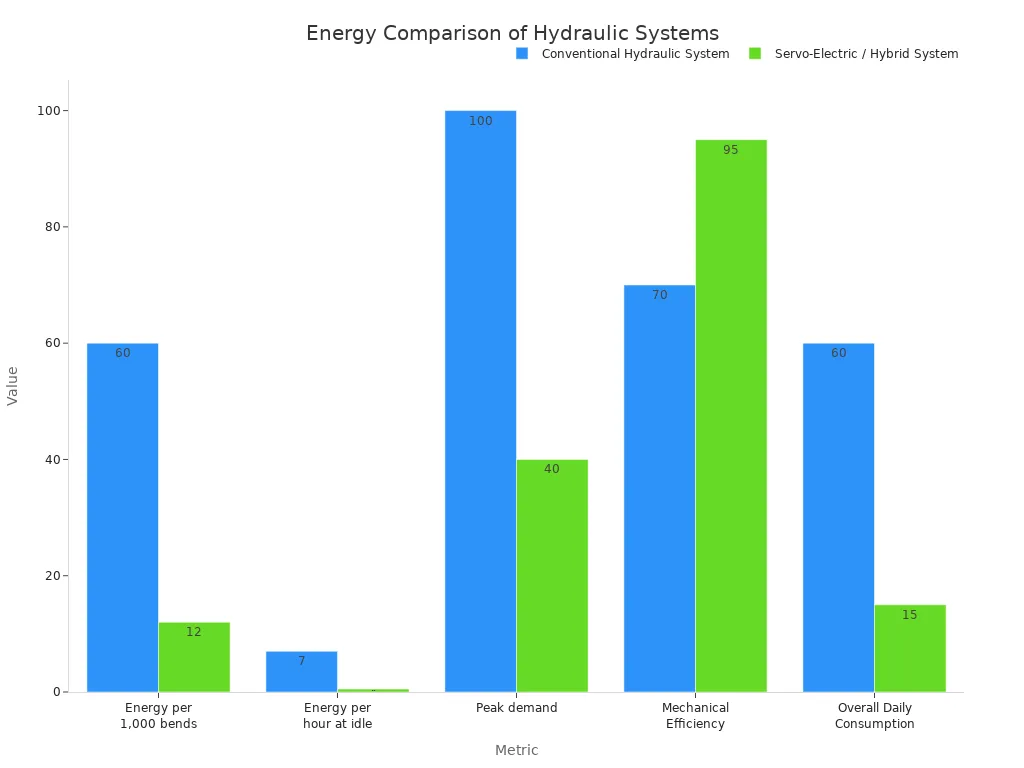
Servo Pump units offer significant advantages over traditional hydraulic systems. They provide superior energy efficiency. For example, a conventional hydraulic system might consume around 60 kWh per day, while a servo-electric or hybrid system uses roughly 12–18 kWh per day. This represents a 67%–80% energy reduction.
| Metric | Conventional Hydraulic System | Servo-Electric / Hybrid System | Key Impact / Benefit |
|---|---|---|---|
| kWh per 1,000 bends | Approx. 60 kWh/day | Approx. 12 kWh/day (~5 kWh per test set) | 67%–80% energy reduction; potential savings >$15,000/year |
| kWh per hour at idle | ~7 kW continuous draw | ~0.5 kW draw | Eliminates parasitic waste and heat-related efficiency loss |
| Peak kW demand | High spikes (6–7x normal current at startup) | Smoothed load (electronic ramp-up, metered power) | Cuts peak demand by up to 60% |
| Mechanical Efficiency | 60–80% | >95% | Reduced mechanical wear and heat, eliminates ~150 gallons of oil disposal/year |
| Overall Daily kWh Consumption | Around 60 kWh/day | Roughly 12–18 kWh/day | Significant overall energy reduction |
These units also achieve substantial noise reduction, averaging up to 20 dB(A) compared to traditional systems. A specific VFD designed for variable-speed operationcan achieve an 8 to 10 dB(A) noise reduction. Servo-driven pump machines typically operate at a lower noise level, around 68 dB(A), contrasting with the higher noise levels of hydraulic machines. These benefits make a Servo Hydraulic Pump unit manufacturer an attractive partner for modernizing hydraulic systems.
Core Components and Critical Selection Criteria for Servo Pump Units

Matching Servo Motor and Hydraulic Pump Types
Selecting the right servo pump unit requires careful consideration of its core components. Engineers must match the servo motor and hydraulic pump types to the specific application demands. This involves evaluating the required power, speed, and torque characteristics of the motor against the flow rate and pressure capabilities of the pump. Different pump designs, such as internal gear, external gear, or piston pumps, offer varying efficiencies and performance profiles. The chosen combination must deliver the necessary hydraulic power while optimizing energy consumption and system response.
The Role of Drive and Control Systems in Precision
Drive and control systems play a pivotal role in achieving the high precision characteristic of servo pump units. Servo motors provide precise control over position, speed, and torque. Servo drives act as the command center, dictating how the motor should move by regulating power and control signals. This integrated system allows for real-time performance adjustments and maintains stable positions, crucial for applications requiring high precision. Unlike conventional electric motors, servo motors, in conjunction with servo drives, enable precise motion control. They process control signals or feedback from sensors to optimize performance in real time. This ensures high precision and efficiency, making them indispensable in industrial applications that require strict control and reliable performance.
Servo drives are programmable, allowing customization and adaptation to the specific needs of each industry. This offers a key advantage in sectors demanding high precision and control. By processing control signals or feedback from sensors, the servo drive not only regulates the motor’s power input but also optimizes its performance in real time. This ensures maximum precision, as speeds and torques can be precisely controlled and maintained based on predetermined targets. The speed can also adjust to a target value in a fraction of a second.
Servo pump units contribute to precision by minimizing product defects caused by pressure variations, particularly in applications like injection molding. They control hydraulic fluid flow with a servo motor-driven pump, rather than relying on less efficient valve-based systems. This achieves more precise and efficient control over fluid flow and pressure. This precision directly impacts product quality, reducing instances of defects and non-uniformity in the final shape, which often result from inconsistent mold pressure. This leads to shorter cycle times, higher accuracy, and reduced noise levels.
A control circuit enhances performance through a position-sensing device, such as an encoder or potentiometer. This device continuously monitors and adjusts the motor's position. This control loop ensures precise positioning by comparing the motor’s current position with the target position and making necessary adjustments. A typical setup includes a PLC providing high-speed pulse output, a servo drive interpreting PLC signals, and a servo motor acting as the final actuator. This system offers high precision, energy efficiency, low noise, proportional control, and microprocessor integration. Key features include the high energy conversion efficiency of servo motors, adaptive flow and pressure outputs, and the stoppage of the servo motor during product cooling phases. The hydraulic pump servo system boasts a fast response time of 40ms-50ms, critical for precision molding. Hydraulic pump displacement and maximum servo motor speed are key factors affecting response speed. The revolutionary hydraulic pump servo drive and control technology, employing an AC permanent magnet synchronous servo motor to drive the hydraulic oil pump, enhances drive-level control of injection molding machines. This results in energy savings, rapid dynamic response, stable pressure control, and superior low-speed performance.
Assessing Energy Efficiency and Total Cost of Ownership
Evaluating energy efficiency and the total cost of ownership (TCO) is crucial for selecting a servo pump unit. TCO encompasses more than just the initial purchase price. It includes setup expenses, daily operational costs like power consumption, and maintenance throughout the equipment's lifespan. Training costs for workers and support expenses for optimization and calibration also contribute to TCO. Finally, depreciation, representing the decrease in efficiency or productivity over time, forms part of the overall cost.
Servo pump units significantly improve energy efficiency. Variable-speed controllers and synchronous servo motors can reduce energy consumption by up to 60% compared to conventional units. This directly lowers operational costs. Connectivity for condition monitoring, through integrated sensors and IoT technologies, allows real-time monitoring of parameters like oil level, temperature, and pressure. This enables predictive maintenance and prevents unplanned downtime, further reducing maintenance costs. A compact design, often up to 75% smaller, and reduced oil volume (e.g., from 600 to 150 liters) save valuable floor space and decrease oil costs and disposal expenses. These factors collectively contribute to a lower TCO over the unit's operational life.
Considering Noise Reduction and Environmental Impact
Noise reduction and environmental impact are increasingly important selection criteria. Servo pump units offer substantial advantages in these areas. Reducing the speed of an 1800 rpm motor to 200 rpm can decrease noise by 15-20 dBA, especially during partial load or idle times. Variable speed technology makes the working environment much more comfortable for personnel. Customers often underestimate noise reduction until they experience a variable speed hydraulic power unit. Variable speed pump drives eliminate the need for expensive special covers or shields for noise protection. Bosch Rexroth's Sytronix system integrates energy-efficient hydraulic pumps with advanced electronics and controls. Their 'Go Green' project involves retrofitting hydraulic power units with servo drives and servo-driven pumps using variable speed technology to improve efficiency and reduce noise.
Environmental regulations also play a role. Energy Efficiency Regulations aim to reduce energy use and operational costs for hydraulic systems. They mandate that machines meet specific standards, often by adopting advanced hydraulic systems that operate more efficiently, minimizing overall energy consumption and carbon footprint. Noise Control Regulations require manufacturers to reduce noise levels in hydraulic systems through methods such as sound insulation, shock absorbers, and improved machine design. The goal is to protect workers' hearing and reduce noise pollution in industrial environments. A reputable servo hydraulic pump unit manufacturer will design products that comply with these regulations.
Integration Complexity and Compatibility with Existing Systems
Integrating a new servo pump unit into an existing hydraulic system presents several complexities. An existing 35-year-old central hydraulic system with fixed displacement gear pumps, for example, faced significant energy waste due to oil flow over relief valves. High-precision servo valves in test rigs were sensitive to fluid contamination because the system was not airtight, leading to frequent and expensive repairs. This highlights challenges related to fluid cleanliness and the impact of older infrastructure on sensitive new components.
Key integration challenges include compatibility with existing automation controllers and hydraulic circuits. The new unit must meet specific performance requirements such as flow rates, pressure ranges, and response times. Adherence to regulatory standards like ISO or ASME is also critical. High initial costs and the need for specialized staff training are common hurdles. Careful system design ensures integration into existing hydraulic circuits via control valves and sensors. Compatibility with automation controllers and PLCs ensures seamless operation. Regulatory compliance, especially in aerospace and medical applications, requires adherence to standards such as ISO 13485 and AS9100. Proper calibration and maintenance sustain performance and longevity. Ensuring staff training and establishing maintenance routines maximize ROI. Sensitivity to electrical and hydraulic conditions requires consistent quality of power supply and fluid cleanliness.
Servo pump units necessitate extremely clean hydraulic fluid to prevent damage, unlike gear pumps which can tolerate some contamination. These pumps are designed for seamless integration with modern electronic control systems, enabling advanced functionalities such as load sensing, pressure compensation, and programmable response characteristics.
A Step-by-Step Guide to Selecting Your Servo Hydraulic Pump Unit Manufacturer
Comprehensive Data Collection and System Analysis
Selecting the optimal servo pump unit begins with a thorough understanding of the existing hydraulic system. Engineers must gather comprehensive data to define performance requirements accurately. This process involves assessing cylinder and actuator performance. They conduct cylinder extension tests to verify speed, force, and smoothness. Retraction performance is also tested for operation and holding capability. Seal condition assessment involves inspecting for leakage and wear. Rod and barrel inspections check for scoring and wear. Proper setup and support are verified through mounting and alignment checks.
Filtration and contamination control are equally important. Engineers inspect filter elements, including return, pressure, and suction filters. They assess bypass indicators to monitor restriction levels. Contamination level testing involves particle counts and analysis. Breather cap maintenance includes inspecting and servicing the reservoir breather. Fluid samples are collected for laboratory analysis and trending.
Monitoring various parameters provides crucial insights. Temperature monitoring of fluid and components helps identify issues like failing coolers or excessive pressure drops. Fluid analysis includes viscosity tests to ensure proper lubrication and prevent efficiency drops. Water content checks prevent corrosion. Particle contamination counts measure particles at various micron sizes to prevent wear. Acid number, oxidation, and additive depletion indicate fluid aging. Pressure measurements at the pump outlet and downstream, along with pressure drops across components, help identify pump wear or restrictions. Flow rate measurements compare actual flow to design specifications, detecting clogged filters or lines. Checking for air entrainment and cavitation prevents erratic motion and damage. Identifying internal and external leakage addresses reduced force or pressure drops.
Best practices for collecting operational data involve leveraging predictive maintenance. This relies on sensors to gather real-time performance data. These IoT sensors transmit data to centralized storage. They collect information on fluid quality, temperature and pressure variations, fluid flow rates, fluid quantity in reservoirs, system vibrations, emissions, and leakages. Sensors also monitor surface cracks, wear and tear of cylinders, hoses, and other fluid power components. Establishing a reliable predictive maintenance program requires seamless data transfer between fluid-powered assets and analytics tools. This necessitates developing integrated systems where sensors, industrial control systems, and enterprise software collaborate to collect data. Investment in secure digital networks, cloud technology, and advanced technologies like AI and machine learning improves data transfer and analysis speed and accuracy. Predictive maintenance tracks equipment performance and health in real-time. This helps avoid costly, unexpected breakdowns and allows for planned maintenance. Remote monitoring of real-time machinery information sends alerts when recommended thresholds are triggered.
Engaging with Potential Suppliers and Specification Review
After a thorough system analysis, engaging with potential suppliers becomes the next critical step. Evaluating a servo hydraulic pump unit manufacturer requires a comprehensive approach. Consider their energy efficiency. Servo-driven pump machines offer significantly better energy efficiency, consuming 65%-70% less energy compared to constant-speed motor hydraulic machines. This is because the pump only operates when oil flow is demanded. Noise level is another key factor. Servo-driven pump machines typically have a much lower noise level, around 68 dBA, compared to standard hydraulic machines.
Service and maintenance aspects are vital. Fixed-displacement pumps are faster, easier to change, and less expensive than variable-displacement pumps. Servo-driven pump machines do not have Rotex couplings, eliminating a common maintenance item. Modern machines offer better analysis features, including embedded oscilloscope functions for servo drives and remote troubleshooting capabilities. Oil quality and maintenance are also important. Oil in servo-driven pump machines experiences less stress, leading to slower degradation of oil quality and reduced maintenance needs.
Evaluate the supplier's quality assurance. Look for technical accumulation, strict quality control, and practical verification. Certifications like ISO 9001, CE, UL, and major international classification societies demonstrate commitment to quality. Products should undergo high-temperature, high-pressure, and fatigue resistance tests. A longer average service life, verified by leading customers, indicates reliability. Assess technological capabilities, such as industry standard-setting and advanced core products. A dedicated R&D team for customization, like a 120-person team for parameter customization, shows strong support.
Consider production capacity and delivery reliability. An annual output of 200,000 hydraulic pumps and 15,000 energy-saving servo systems indicates robust capability. Controllable lead times, such as 3-7 days for regular models and 15-20 days for custom models, are beneficial. An emergency replenishment guarantee for production-oriented customers is also a strong point. After-sales support is crucial. Look for 24-hour response efficiency for overseas customers. Planned spare parts warehouses in key markets with 7-day delivery for maintenance parts are valuable. On-site support through local cooperative service providers or headquarters engineers ensures prompt assistance.
Cost reduction is a significant benefit. Integrated solutions can save 15%-20% in procurement costs. Energy-saving servo vane pumps can reduce energy consumption by 20%-30%, lowering operation costs. A longer product lifespan can reduce annual maintenance costs by over 30%. Product adaptability and customization are also important. A supplier covering various core industrial fields and offering professional customization services for hydraulic pump parameters based on equipment working conditions demonstrates flexibility. Industry recognition, strategic partnerships with world-renowned enterprises, and reference cases with global industry leaders confirm a supplier's reputation.
The Importance of Reliability, Maintenance, and Serviceability
Reliability, maintenance, and serviceability are paramount for the long-term success and cost-effectiveness of any hydraulic system integration. Establishing a comprehensive maintenance schedule is essential. This schedule should base on usage, operating conditions, and manufacturer recommendations. Adhering strictly to it ensures timely preventive maintenance. Detailed maintenance records of all activities, including dates, tasks, and observations, track history, aid troubleshooting, and plan future maintenance. Maintenance personnel must receive adequate training in specific procedures and safety protocols. They should stay updated with industry practices and manufacturer recommendations. Implementing proactive troubleshooting encourages reporting unusual noises, vibrations, or performance variations. This addresses issues promptly and prevents damage.
Regular maintenance tasks include lubrication, cleaning, cable inspection, calibration, and temperature monitoring. Fluid maintenance involves regularly replacing filters with OEM parts. Consider filters for moisture and acid control. Keep reservoirs filled and consider offline filtration for high contaminants. Test and flush fluids at manufacturer-suggested intervals. For actuators, recondition and rebuild them often. Check alignment and keep tools off the rod. Test in-house rebuilds at high pressure. Control heat by checking for heat sources. Maintain oil temperature below manufacturer suggestions. Clean heat exchangers and reservoir walls during outages. Servos and other valves require cleaning and calibration every 18 to 24 months or more often. Avoid repairs requiring parts replacement. Handle servos with care and do not disassemble them. Consolidating system services with one vendor ensures consistent standards for cylinders, servos, pumps, filters, and motors. The vendor can also develop a records database. Maintain a full or partial set of spares in the warehouse based on outage length and order lead times.
Perform regular visual inspections, with frequency depending on the operating environment. Look for wear, leaks, or loose connections. Maintain detailed maintenance records of inspection findings, dates, observations, and corrective actions to track trends. Ensure a clean environment for servo motors. Regularly remove dust and debris with compressed air, following manufacturer cleaning recommendations. Apply proper lubrication using only manufacturer-recommended lubricants, adhering strictly to schedules and quantities. Maintain the operating environment within recommended specifications for temperature, humidity, and vibration, using control measures if necessary. Monitor key performance indicators (KPIs) for servo drives, such as temperature, torque, and current. Establish warning thresholds. Maintain cooling systems for servo drives by cleaning dust filters, verifying airflow, and checking coolant levels. Regularly check and tighten all electrical connections on servo drives, following manufacturer's recommended torque values. Follow manufacturer recommendations for software updates to optimize drive performance and prevent compatibility issues.
Non-intrusive flow measurement periodically measures internal leakage of individual components in an operating hydraulic system. This detects variations indicating wear or contamination. Component isolation testing isolates faulty parts in an otherwise healthy system. It uses pump cycle times, amp draw, and pressure losses to indicate failure. Periodic sampling and testing of hydraulic oil by an experienced laboratory provides crucial insights. Implement and maintain high-quality filtration. Use filters that meet system cleanliness targets and regularly inspect or change filter elements. Use the correct hydraulic fluid for the application, ensuring viscosity, anti-wear properties, and thermal stability match the operating environment. Follow recommended oil-drain intervals, such as changing oil after the first ~500 hours and periodically thereafter based on filter performance and contamination. Conduct regular oil sampling for contamination, wear metal, and degradation. Use trend analysis for early problem identification. Regularly inspect system integrity for loose fittings, worn seals, leaks, or vibration. Periodically check fasteners and seals. Ensure proper installation and alignment between the pump and drive motor. Use appropriate mounting supports and avoid axial or radial strain on the pump shaft. Utilize pressure-relief valves, accumulators, or damping circuits for pressure management to smooth out spikes. Design return (case-drain) lines properly to avoid internal pressure buildup and minimize stress on the pump housing. Employ thermal control measures like coolers or heat-exchangers and monitor hydraulic fluid temperature. Design suction lines to be short, straight, adequately sized, and use coarse pre-filters to protect the pump inlet. Monitor key parameters such as temperature, pressure, vibration, and oil condition. Deviations provide early warnings of degradation. Develop a 'pump health index' using metrics like particle counts, wear metals, and vibration to assess remaining useful life. Plan scheduled rebuilds or maintenance at predictable intervals based on condition trends to reduce unplanned downtime.
A manufacturer's service and support offerings are crucial. These include customization, technical support, after-sales service, comprehensive product training, personalized support, and ongoing maintenance. These services lead to improved customer satisfaction and enhanced brand loyalty. They can also create increased revenue streams through premium support or additional training. Greater efficiency in production results from involving customers early in the design phase. Aftermarket services provide opportunities for manufacturers to navigate challenges. Digitization enhances service offerings and creates transformational business models centered on value delivered. Manufacturers can overcome common challenges in aftermarket services through strategic approaches. Macroeconomic forces, industry dynamics, and organizational concerns all impact service delivery.
Final Decision-Making and Implementation Planning
The final decision on a servo hydraulic pump unit manufacturer requires careful consideration of all gathered data and supplier evaluations. This strategic choice impacts system performance, operational costs, and long-term reliability. Extensive preparatory work is crucial, especially when introducing new technology. Involve a broad spectrum of personnel from all relevant technology areas, including die design and maintenance, in both planning and practical implementation. Integrate all supporting technologies, such as robots, washer units, and destackers, effectively. Their proper functioning is vital for the overall installation's success. A well-planned implementation ensures a smooth transition and maximizes the benefits of the new servo pump unit.
A well-informed selection of a servo pump unit is crucial for system performance and longevity. Choosing the right unit delivers significant long-term benefits, including substantial energy savings, reduced noise, and enhanced precision. A systematic approach ensures optimal hydraulic system integration and maximizes operational efficiency.
FAQ
What is a servo pump unit?
A servo pump unit integrates a servo motor with a hydraulic pump. This system provides precise control over hydraulic fluid flow and pressure. It significantly improves efficiency and performance in hydraulic applications.
How do servo pump units save energy?
Servo pump units save energy by operating only when the system demands oil flow. They use variable-speed motors. This reduces power consumption significantly compared to traditional, constantly running hydraulic systems.
What are the main benefits of servo pump units?
Servo pump units offer superior energy efficiency, significant noise reduction, and enhanced precision. They also contribute to a lower total cost of ownership and a reduced environmental impact.